
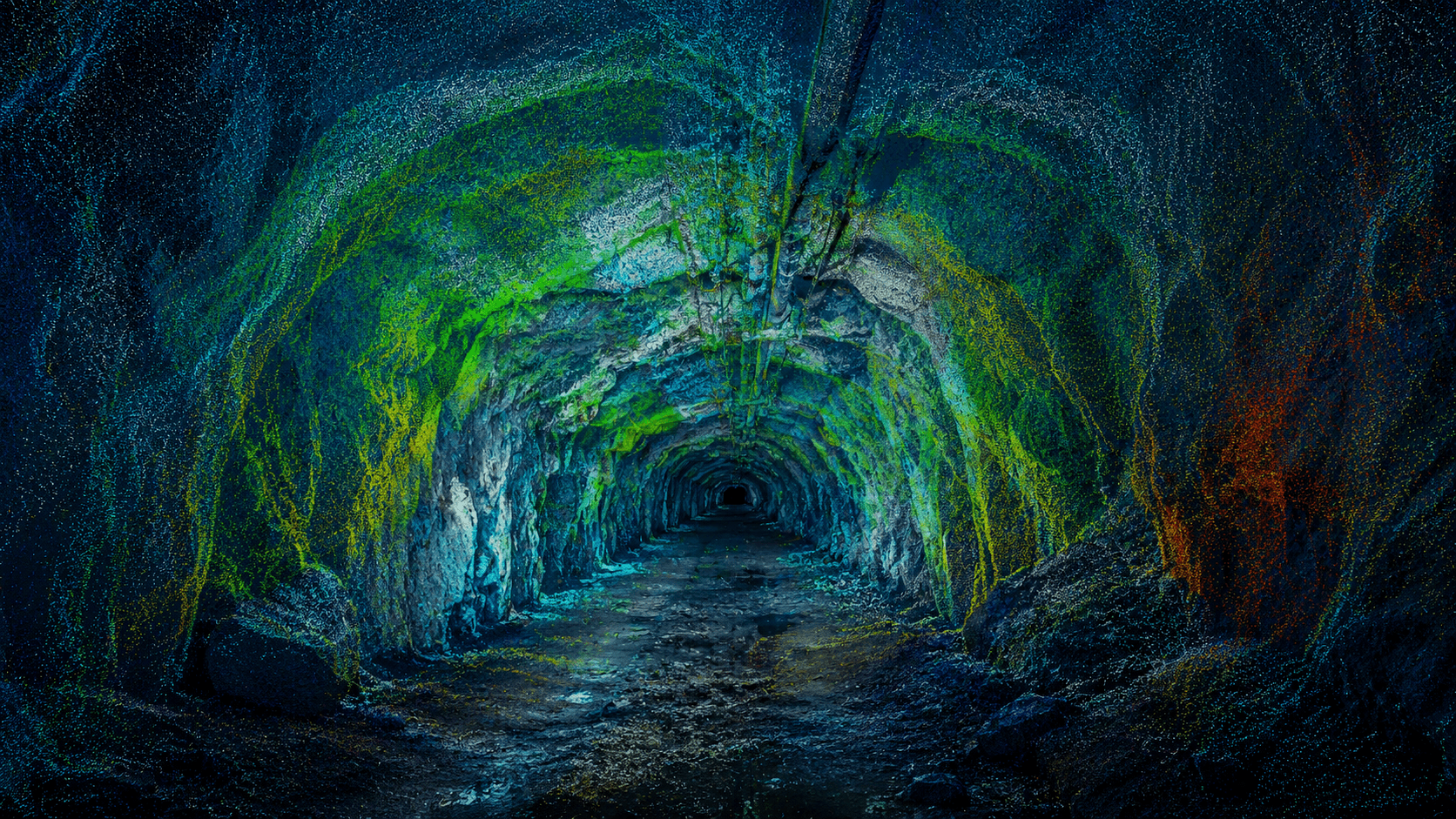
Underground
mining
Restricted, complex workings where you can't stand back and watch a slope — movement is read by comparing scans over time, across kilometres of drives. DTG runs one of its largest monitoring programmes here.
The escalations that matter
Independent processing, review and escalation across DTG's underground convergence work — the throughput behind the numbers, and the discipline that turns it into the movements that matter.
That makes underground monitoring an interpretation problem as much as a measurement one: turning scan-over-scan comparison into a clear picture of what's actually moving.
Kilometre after kilometre of ground, read for movement.
Underground monitoring isn't one drive — it's a continuous programme spanning kilometre after kilometre of workings, every section compared over time. The scale is the point: sustaining a clear, consistent read across it.
Reading movement across the workings.
Underground monitoring leans on spatial comparison and convergence — drawn from the best available sources and turned into one interpreted picture.
DTG's independence is the point: on your workings, what we recommend is driven by your ground and your data, not by any product. We integrate whatever's available — and because the value is in how we read it, new sources simply add to the picture.
We interpret the movement. We don't replace the ground control team.
Being clear about the boundary is part of being trustworthy. DTG provides independent monitoring, processing, QA/QC and interpretation — strengthening the decision, not owning it.
The environment is underground. The work is our services.
The how — the monitoring, the analytics, the reporting, the advice — is DTG’s core services, applied underground.
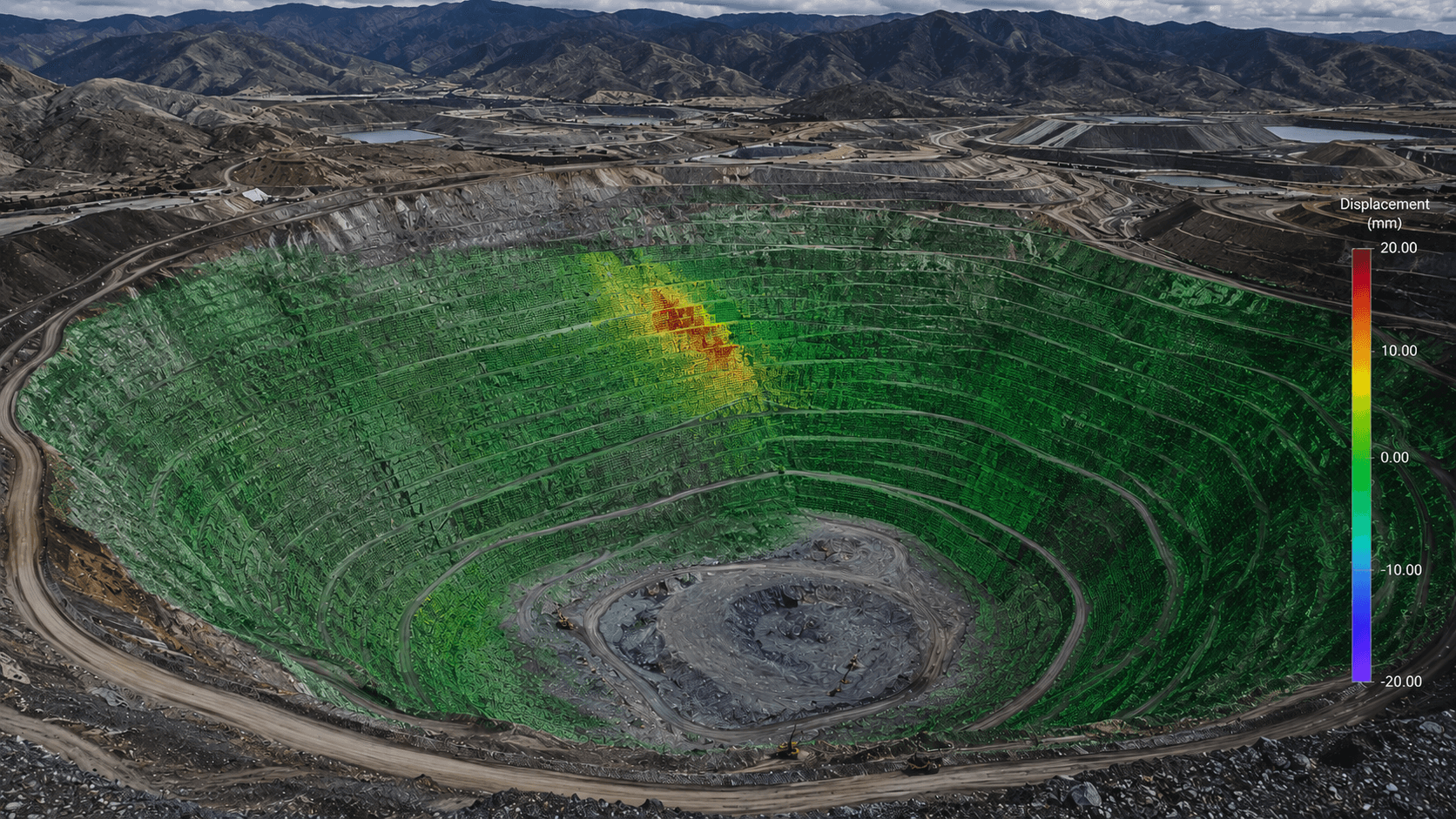
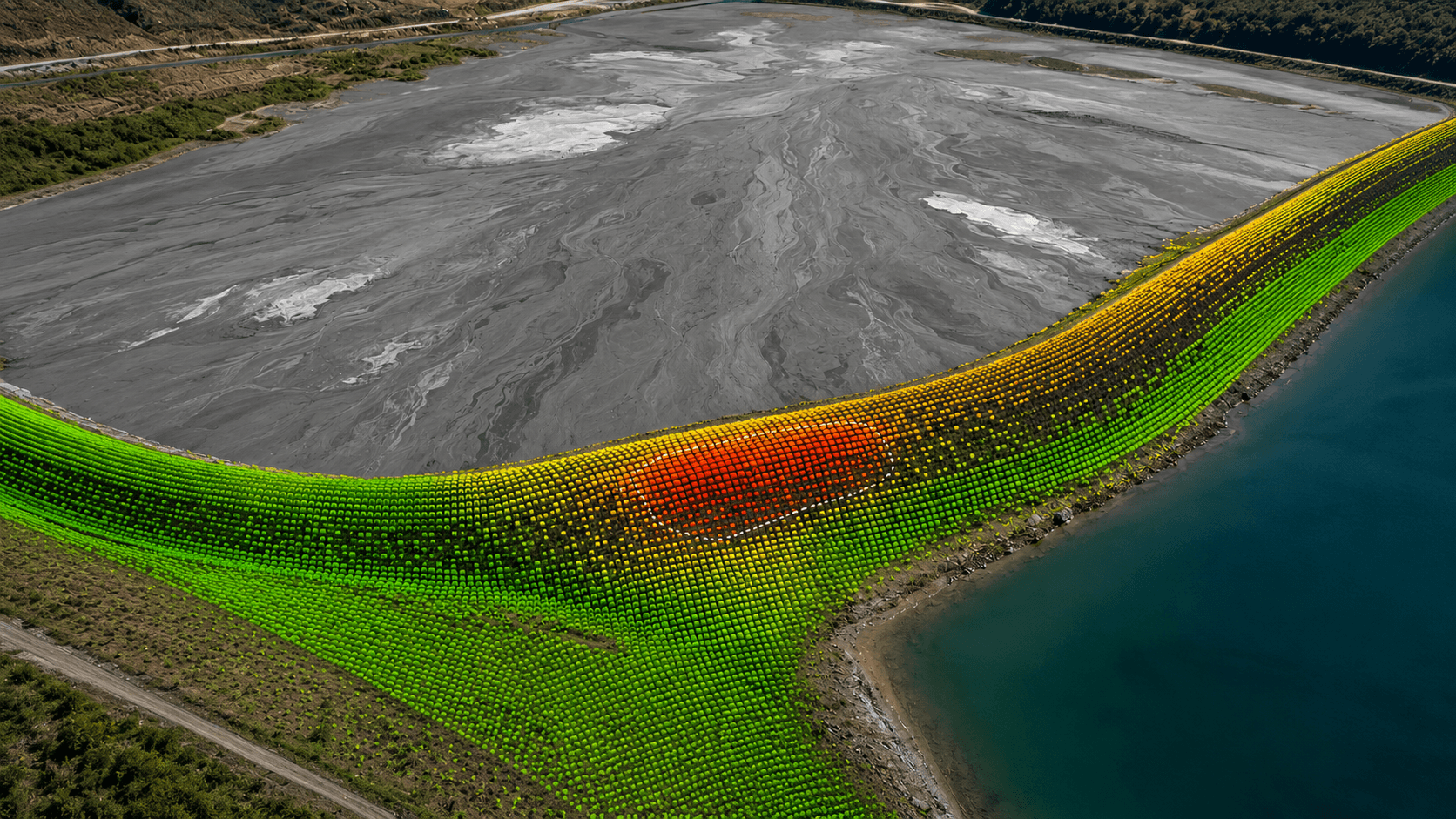
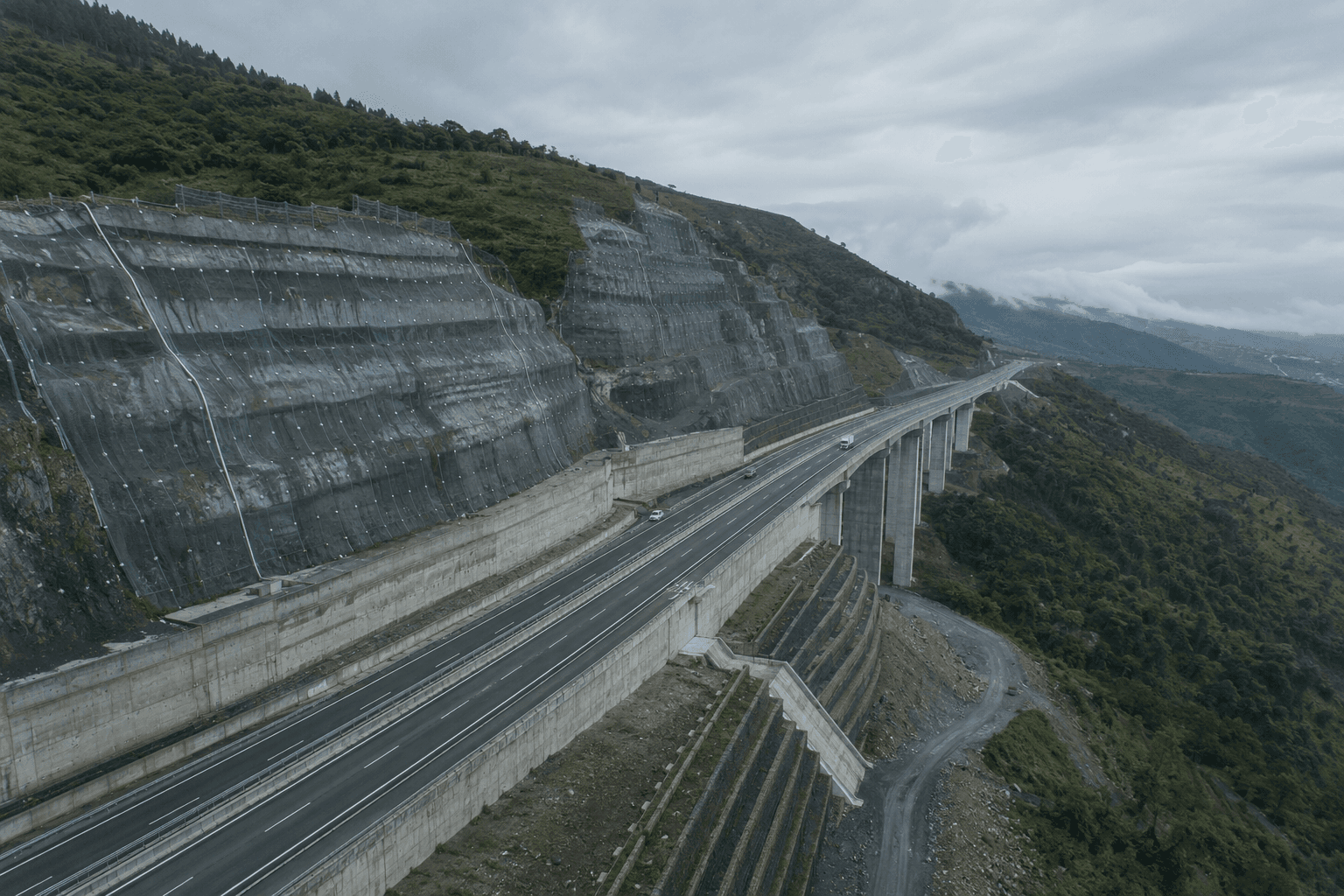
Where else DTG works.
Monitoring underground?
Tell us about your workings and what you're watching — we'll show you how DTG would support it.
Talk to DTG