
Open-pit
mining
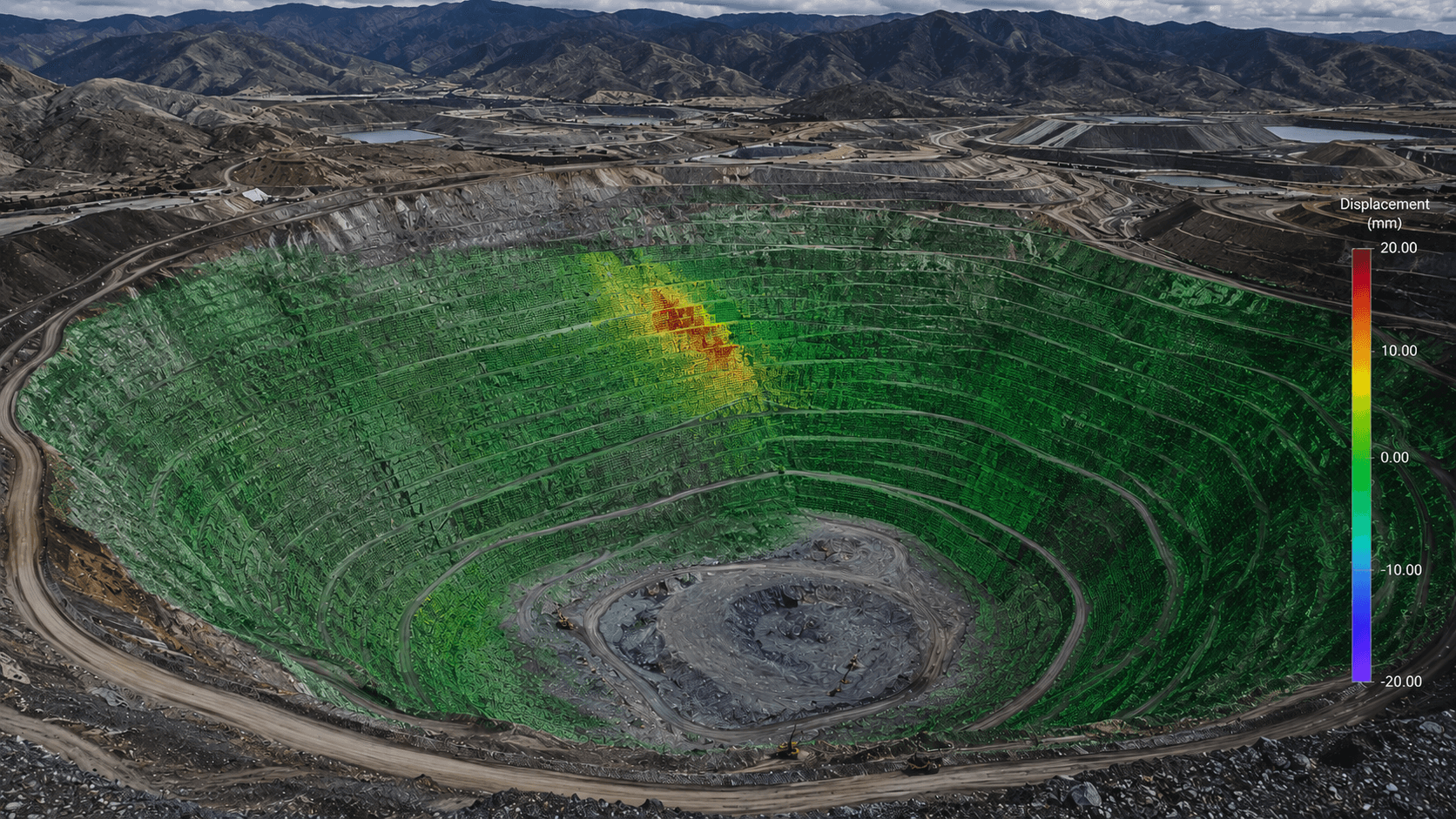
Live, fast-changing slopes where movement can build toward failure in shifts, not weeks. This is where DTG's monitoring runs hardest — and where our centre keeps the watch, continuously.
Radar-led slope monitoring, run from our centre.
Open-pit slopes can move toward failure in shifts, not weeks — so DTG's monitoring centre watches them in real time, validates the alarm stream, and escalates the movement that matters against your TARP thresholds.
This is the most escalation-driven environment DTG works in: high-frequency radar, alarms that matter, and decisions measured in shifts, not weeks.
Movement can be progressive, regressive or sudden — and telling them apart, fast, is what turns data into the right call.
From overwhelming alarm volume to the movement that matters.
The value isn't raising alarms — anything can do that. It's the disciplined workflow that filters an overwhelming volume of automated alarms down to the real ground failures, so the right movement reaches the right people.
That workflow — validate the noise, escalate the real movement, act on the failures — is the discipline.
Radar-led, and read as one picture.
Open-pit monitoring leads with real-time slope stability radar, layered with other sources — each answering a different question about the slope.
DTG's independence is the point: on your pit, what we recommend is driven by your slope and your data, not by any product. We work across whatever's already on site — and because the value is in how we read it, new sensors simply add to the picture.
We support the decision. We don't own the pit.
Being clear about the boundary is part of being trustworthy. DTG provides independent monitoring, review and escalation support — we strengthen the decision, we don't replace the people accountable for it.
The environment is the pit. The work is our services.
The how — the continuous review, the analytics, the reporting, the advice — is DTG’s core services, applied to the pit.
Monitoring an open pit?
Tell us about your slopes and your setup — we'll show you how DTG would support it.
Talk to DTG